Why I don’t worry about Hitwise

As the CEO of a Group Buying business in the nascent and burgeoning category it was critical that I had a very clear view of marketing effectiveness, with Audience Engagement being the key indicator. There were a number of sources available to the team that purported to provide reliable Audience measurement and insights however I only depended on two to provide an accurate view, Omniture and Nielsen.

Alternative sources included Hitwise, Google Analytics and Alexa – Google Analytics is cheap/free but pretty unreliable and Alexa provides a Relative view only. Hitwise is the worst of the bunch though given their data collection methodology means it doesn’t represent the broader online population and worse still, it doesn’t necessarily reflect human activity!

Here are the two main issues with Hitwise data:

1. Hitwise does not measure individuals – it measures traffic.

This effectively means you could hit your website with bot traffic to boost your numbers and it would show as traffic in Hitwise. Nielsen Australia removed 50% of GroupOn Australia’s traffic in March because that traffic consisted largely of unsolicited clicks, meaning popups that appear as you close scurrilous ads (Congratulations, you have won $1,000,000!!!!!) – those clicks are still counted in Hitwise.

2. Hitwise doesn’t include key ISPs

Hitwise harvest data from partnering ISP’s, however Australia’s two largest ISP’s BigPond and Optus don’t participate. This is major a concern as a large proportion of internet users (about 58%) are not reflected in their data. This is a particular problem for a business like Cudo given its mainstream audience, and mainstream Australia do not typically use fringe ISPs.

Nielsen was recently selected as the official measurement partner of the Australian IAB, in their press release they said:

With the endorsement of Nielsen Online Ratings, IAB Australia is identifying people-based metrics, as opposed to browser-based, as the best and preferred online audience measurement system for the Australian online advertising industry.

This is the nub of the problem. TechCrunch called it out almost two years ago.

At Cudo we didn’t care about browsers for obvious reasons, we cared about people, they still do, like the 1,000,000 plus Australians who go to cudo.com.au each and every month, I couldn’t give a monkeys how many Bots swing by!
GroupOn here in Australia, Bait and Switch is tactic #1

I was disappointed to hear about GroupOn’s Bait and Switch issue concerning the Valentine’s Day offer with FTD, however I immediately jumped to their defence.

A large part of Cudo’s operation is focused on ensuring that the offers we provide are 100% genuine, not just because we advertise on TV and are subject to rigorous standards, but because we believe the long term success of Cudo is hinged upon trust.

Our Merchant partners have to trust that Cudo will do the right thing by them by providing a great audience of new customers, broad brand promotion as described and payment in full within five days. And our members have to trust that Cudo is all about genuine no-brainer offers!

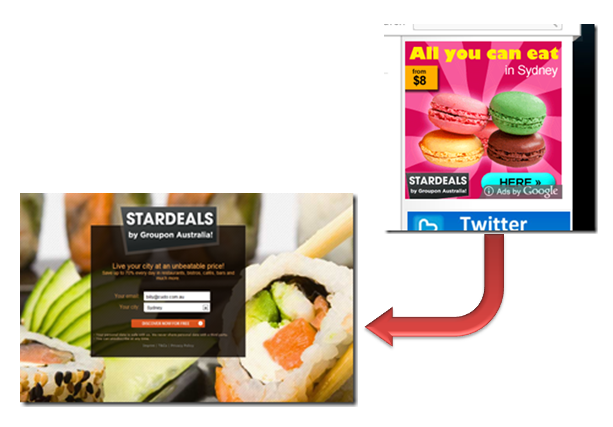
GroupOn must also have a whole team of people focused on ensuring that offers are “as stated”, hence why I jumped to their defence. However after seeing the following “all you can eat” ad, I am no longer sure!

Clicking on the ad for $8 all you can eat Macaroons takes you to a sign-up page, no such offer exists.

Deceptive. Yes. Bait and Switch. I think so.

Unless I am missing something, this type of Bait and Switch advertising is way out of line and threatens to damage the market as a whole. One thing is for sure, Cudo will never resort to these desperate tactics.

image

Group Buying – audience by numbers

At Cudo we made a decision to do things differently.

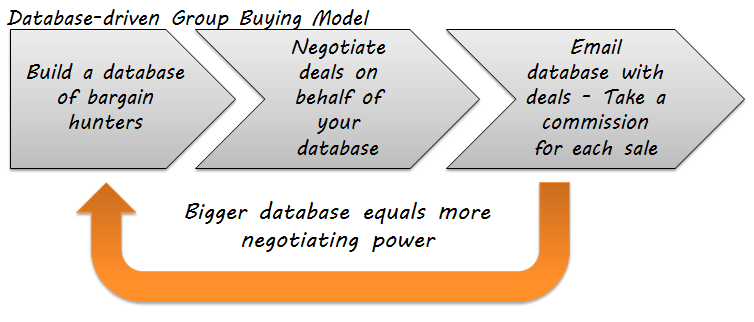
Until Cudo came along, Group Buying business were based on the following core principles:

image

Long term this approach is seriously flawed.

Database-driven Group Buying is a race to zero. Competing primarily on database size means a group buying company is vulnerable to being undercut on commission (revenue share) by competitors with similarly sized or smaller bases. We are already seeing a significant reduction in share from 4 of the top 5 Group Buying business in Australia (Scoopon as little of 10%, Spreets <30%, Jumponit <40%, ourdeal <30%) . Only Cudo is holding share at 50% on each and every offer (averaging 49.6% revenue share to date).

Another key flaw in the database-driven approach and a common complaint from Merchants around the  world is that the average voucher buyer looks more like a bargain hunter than the Merchant’s target customer, meaning less strategic value for the merchant, making the overall category less attractive to Merchants over time.

Cudo is not database-driven. By promoting the Merchant and their Offer on TV and through ninemsn – Australia’s largest portal – Cudo provides a fresh new audience to each offer, resulting in around 30% or more of the vouchers being sold to new Cudo customers who came to Cudo specifically to trial that Merchant’s offer.

image

That said, Cudo has a market leading audience too, both in terms of its member base (more than 500,000 members)and it’s regular visitors, ranked number 1 with 788k visitors in December by Nielsen NetView. We also lead the market when Net Revenue is measured, a critical, long term measure of a businesses’ sustainability. And lastly, and most importantly, we lead the market in Merchant satisfaction, driving the best outcomes for Merchants every day!

At Cudo we have created a new approach to Group Buying, at least two of our key competitors have recognised this and have begun adjusting their model, let’s hope it’s not too late for them, it’s hard to pull-up from a race to zero!